
Why Construction Risk Is Finally Being Priced In
For decades, construction risk in India was absorbed, not analyzed.
Cost overruns were negotiated. Delays were normalized. Time extensions were routine.
Investors, lenders, and developers built contingencies into spreadsheets and hoped execution would catch up. That tolerance no longer exists.
With tighter financing, higher interest rates, faster monetization expectations, and greater accountability, construction risk has moved from the site to the balance sheet.
In this new environment, cost certainty is not a preference — it is a prerequisite.
And this is where prefab and precast construction are fundamentally altering how investors evaluate risk.
What Cost Certainty Really Means (Beyond “Lower Cost”)
Cost certainty is often misunderstood as cheap construction.
In reality, investors care far more about predictability than price.
True cost certainty means:
-
Known capital outlay before execution begins
-
Minimal variation orders
-
Controlled escalation exposure
-
Predictable cash-flow schedules
-
Reliable completion timelines
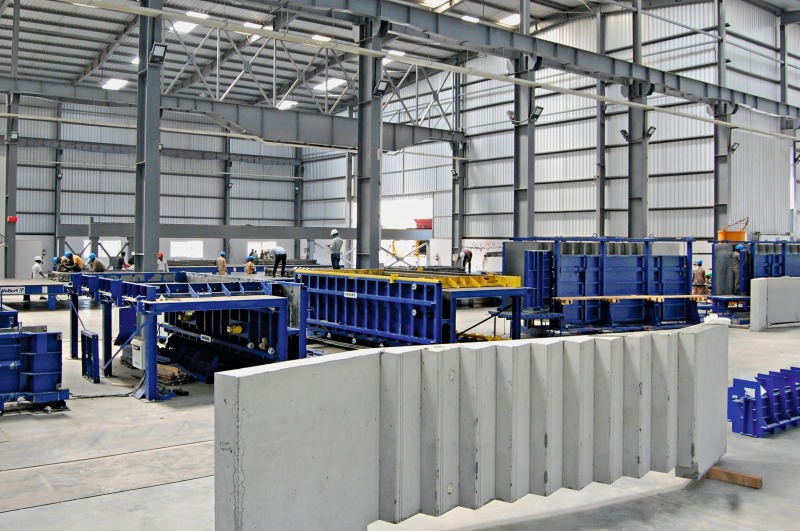
Prefab and precast do not simply reduce costs — they convert uncertainty into managed variables.
That distinction is critical.
Why Traditional Construction Models Create Financial Volatility
1. Sequential Execution = Compounded Risk
Conventional construction follows a linear path:
-
Site readiness
-
Structural work
-
Services
-
Finishing
Any delay in one phase cascades downstream, multiplying cost impact.
Time overruns translate directly into:
-
Extended interest during construction
-
Idle capital
-
Delayed revenue
-
Escalation exposure
From an investor’s lens, this is unquantifiable volatility.
2. Site Dependency Masks True Cost Until It’s Too Late
In traditional models:
-
Productivity is labour-dependent
-
Quality varies trade by trade
-
Rework is discovered late
-
Interfaces fail on site
By the time issues surface, costs are already sunk.
This is why final project costs often differ materially from initial estimates.
How Prefab & Precast Redefine the Risk Equation
They front-load decisions, lock variables early, and eliminate improvisation.
1. Manufacturing Fixes Cost Upstream
Factory production requires:
-
Finalized designs
-
Fixed quantities
-
Defined tolerances
-
Planned logistics
This forces cost commitment before execution, not during it.
For investors, this shifts uncertainty from the construction phase to the planning phase — where it is cheaper and controllable.
2. Parallel Processing Compresses Capital Lock-In
In off-site construction:
-
Manufacturing runs parallel to site work
-
Erection is fast and predictable
-
Commissioning timelines shorten
This reduces:
-
Interest during construction
-
Working capital exposure
-
Time-to-revenue
Speed here is not about efficiency — it is about capital velocity.
3. Reduced Variation Orders = Protected IRR
Variation orders are the silent killers of project IRR.
Prefab & precast reduce variations by:
-
Freezing interfaces early
-
Eliminating site improvisation
-
Integrating structure + envelope + services
The result is not zero variations — but materially fewer, smaller, and earlier variations.
From an investor perspective, this stabilises returns.
Cost Certainty as a Strategic Advantage, Not Just Risk Control

When cost certainty improves, strategic options expand.
Developers and industrial investors can:
-
Commit to aggressive delivery schedules
-
Pre-lease assets earlier
-
Align construction with production timelines
-
Scale repeat projects confidently
-
Access better financing terms
Prefab & precast transform construction from a cost centre into a predictable delivery mechanism.
Why Investors Are Backing Systems, Not Contractors
Investors increasingly differentiate between:
-
Product suppliers
-
Execution partners
-
System integrators
System-led prefab and precast providers offer:
-
Single-point responsibility
-
Repeatable outcomes
-
Transparent costing logic
-
Track records across project types
This is why capital is flowing toward platform-style builders, not fragmented contractor stacks.
Cost certainty is not accidental — it is designed.
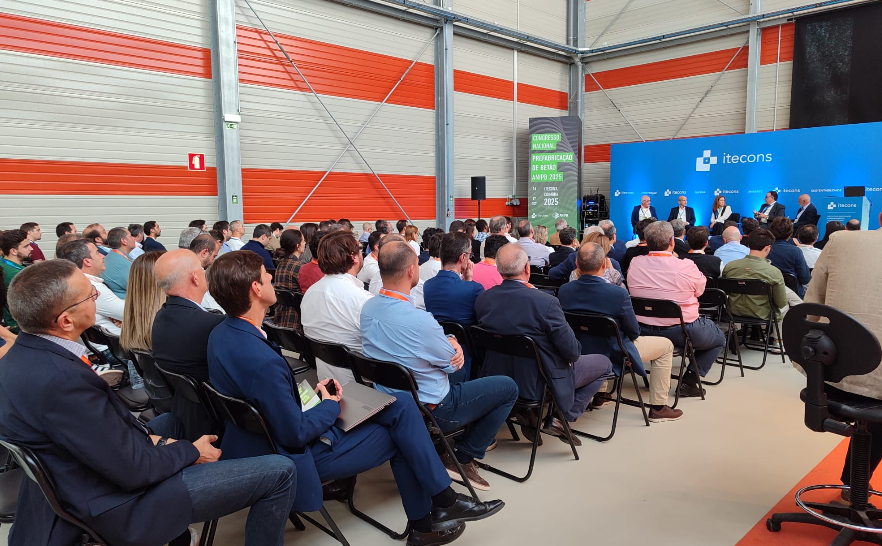
The Missing Link: Where Cost Certainty Conversations Actually Happen

-
Materials
-
Machinery
-
Individual technologies
They rarely address:
-
End-to-end cost models
-
Timeline-linked financial risk
-
System accountability
-
Investor decision frameworks
As a result, serious buyers struggle to connect technology choices with financial outcomes.
Our Curatorial Intent: Making Cost Certainty Visible
The Prefab & Precast Construction Expo – Chennai is designed to surface what is usually hidden:
-
How costs are locked
-
Where risks are eliminated
-
What assumptions truly matter
-
Who owns delivery responsibility
By curating system-level exhibitors, the platform enables:
-
Investor-grade conversations
-
EPC accountability
-
Developer confidence
-
Faster decision cycles
This is not about showcasing innovation.
It is about de-risking capital.
Why This Matters Now More Than Ever
As construction enters a phase of:
-
Higher capital discipline
-
Faster monetisation pressure
-
Reduced tolerance for delays
-
Increased institutional participation
Cost certainty becomes the deciding factor between:
-
Funded vs unfunded projects
-
Scalable vs stalled portfolios
-
Trusted vs replaceable partners
Prefab and precast are no longer optional technologies.
They are financial instruments of risk control.
Conclusion: Construction Is Becoming a Capital Discipline
The future of construction will be defined less by materials and more by predictability.
Projects that:
-
Lock costs early
-
Deliver on schedule
-
Protect investor returns
will attract capital.
Those that rely on hope, buffers, and renegotiation will not.
Prefab and precast are accelerating this transition — not because they are modern, but because they align construction with how capital thinks.
And platforms that understand this shift will become the benchmark arenas where the industry’s most serious decisions are made.